
Home
Resume
Travel
Pictures
Links
Bamberg is a town in Upper Franconia, Germany, on the river Regnitz close to its confluence with the river Main. The town dates back to the 9th century, when its name was derived from the nearby Babenberch castle. Cited as one of Germany's most beautiful towns, its old town has been a UNESCO World Heritage Site since 1993, with Bamberg being home to Europe's largest intact old city wall. From the 10th century onwards, Bamberg became a key link with the Slav peoples, notably those of Poland and Pomerania. It experienced a period of great prosperity from the 12th century onwards, during which time it was briefly the centre of the Holy Roman Empire. Emperor Henry II was also buried in the old town, alongside his wife Kunigunde. The town's architecture from this period strongly influenced that in Northern Germany and Hungary. From the middle of the 13th century onwards, the bishops were princes of the Empire[6] and ruled Bamberg, overseeing the construction of monumental buildings. This growth was complemented by the obtaining of large portions of the estates of the Counts of Meran in 1248 and 1260 by the see, partly through purchase and partly through the appropriation of extinguished fiefs. Bamberg lost its independence in 1802, following the secularization of church lands, becoming part of Bavaria in 1803. The town was first connected to the German rail system in 1844, which has been an important part of its infrastructure ever since. After a communist uprising took control over Bavaria in the years following World War I, the state government fled to Bamberg and stayed there for almost two years before the Bavarian capital of Munich was retaken by Freikorps units. The first republican constitution of Bavaria was passed in Bamberg, becoming known as the Bamberger Verfassung (Bamberg Constitution).
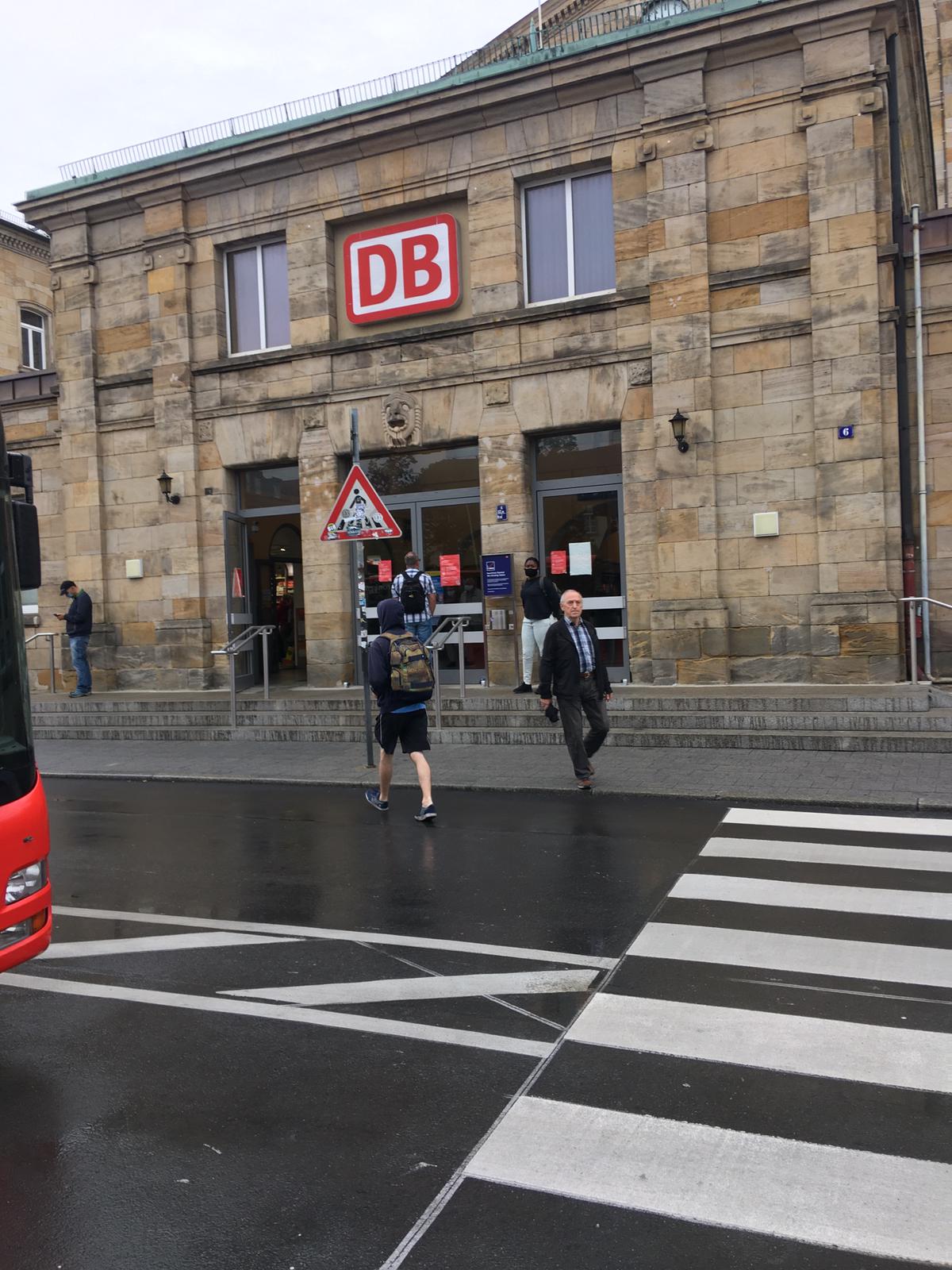
This is the main train station in Bamberg. Bamberg station is the only passenger station of the city of Bamberg in Upper Franconia in the German state of Bavaria. It is a major hub station for local trains operated by Deutsche Bahn and Agilis and is also a regularly served by Intercity-Express and Intercity trains. The station is on the Nuremberg–Bamberg, Bamberg–Hof and Bamberg–Rottendorf railway lines. It has seven platform tracks and is classified by Deutsche Bahn as a category 2 station. It is the northern terminus of line S1 of the Nuremberg S-Bahn.
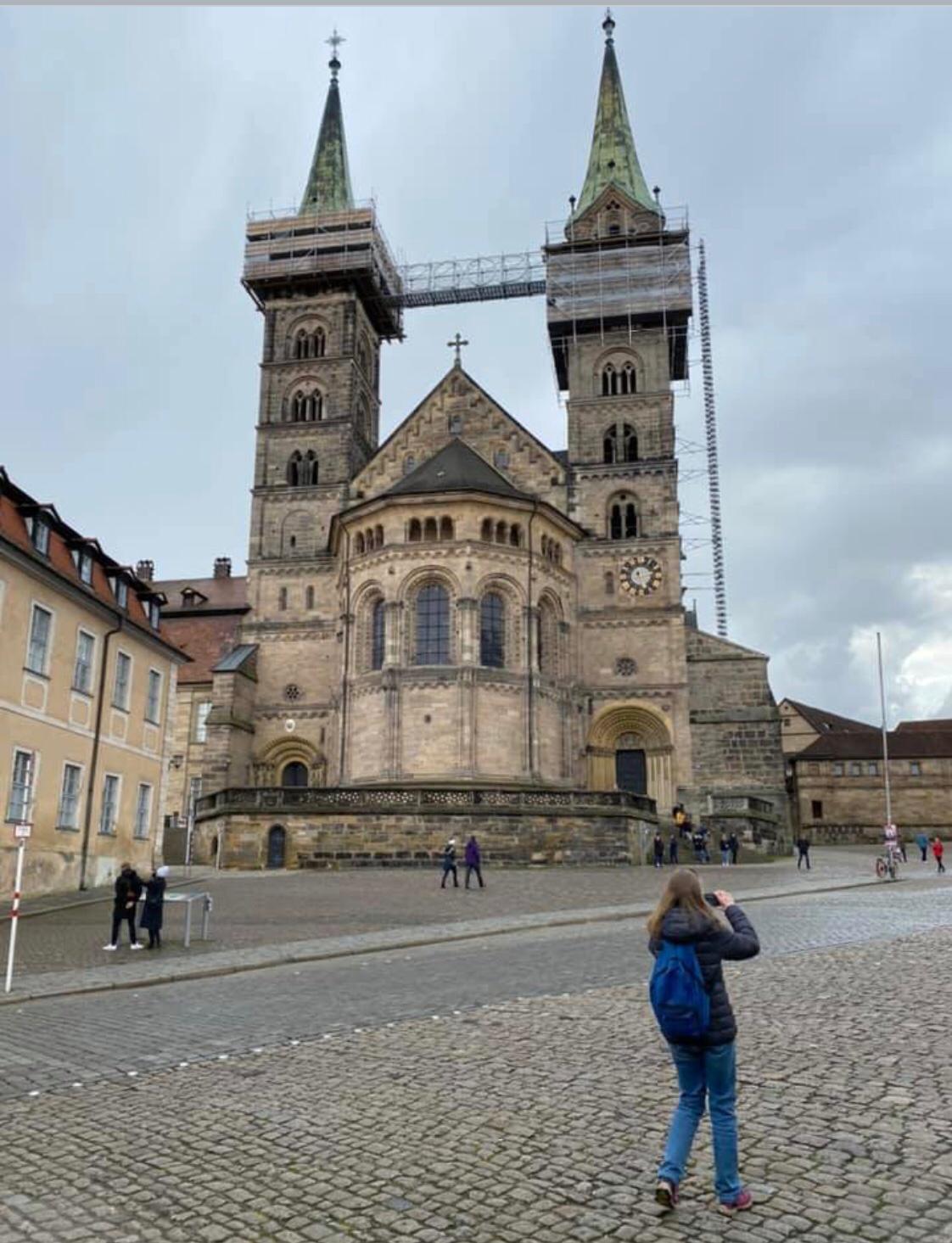
The Bamberg Cathedral is a church in Bamberg, Germany, completed in the 13th century. The cathedral is under the administration of the Roman Catholic Church and is the seat of the Archbishop of Bamberg. The cathedral is a late Romanesque building with four imposing towers. It was founded in 1002 by the emperor Henry II, finished in 1012 and consecrated on May 6, 1012. It was later partially destroyed by fire in 1081. The new cathedral, built by St. Otto of Bamberg, was consecrated in 1111, and in the 13th century received its present late-Romanesque form. The cathedral is about 94 m long, 28 m broad, 26 m hi3:26 PM 10/3/2021gh, and the four towers are each about 81 m high. Of its many works of art may be mentioned the magnificent marble tomb of the founder and his wife, the empress Cunigunde, considered the masterpiece of the sculptor Tilman Riemenschneider, and carved between 1499 and 1513.
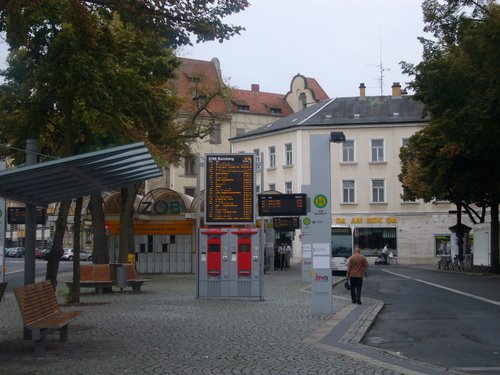
This Is the main station for the city busses. This is in downtown Bamberg. From here its a short walk from C&A which is a Wal-Mart type department store as well as Herties, another simular type store. Aso there are many amazing restaurants, cafe's and at night some pretty exciting clubs. Sadly the club Green Goose closed a few years after I left.
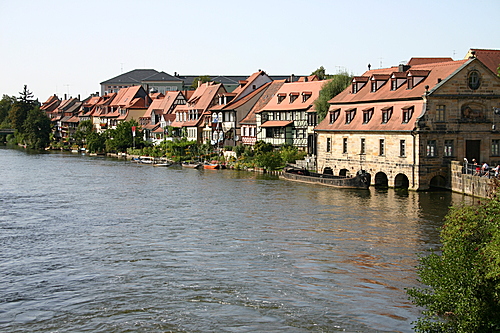
This part of Bamberg is known as Little Venice for obvious reasons. This is one of the most picturesque parts of the city and that is saying a lot as there many amazing sites in Bamberg.
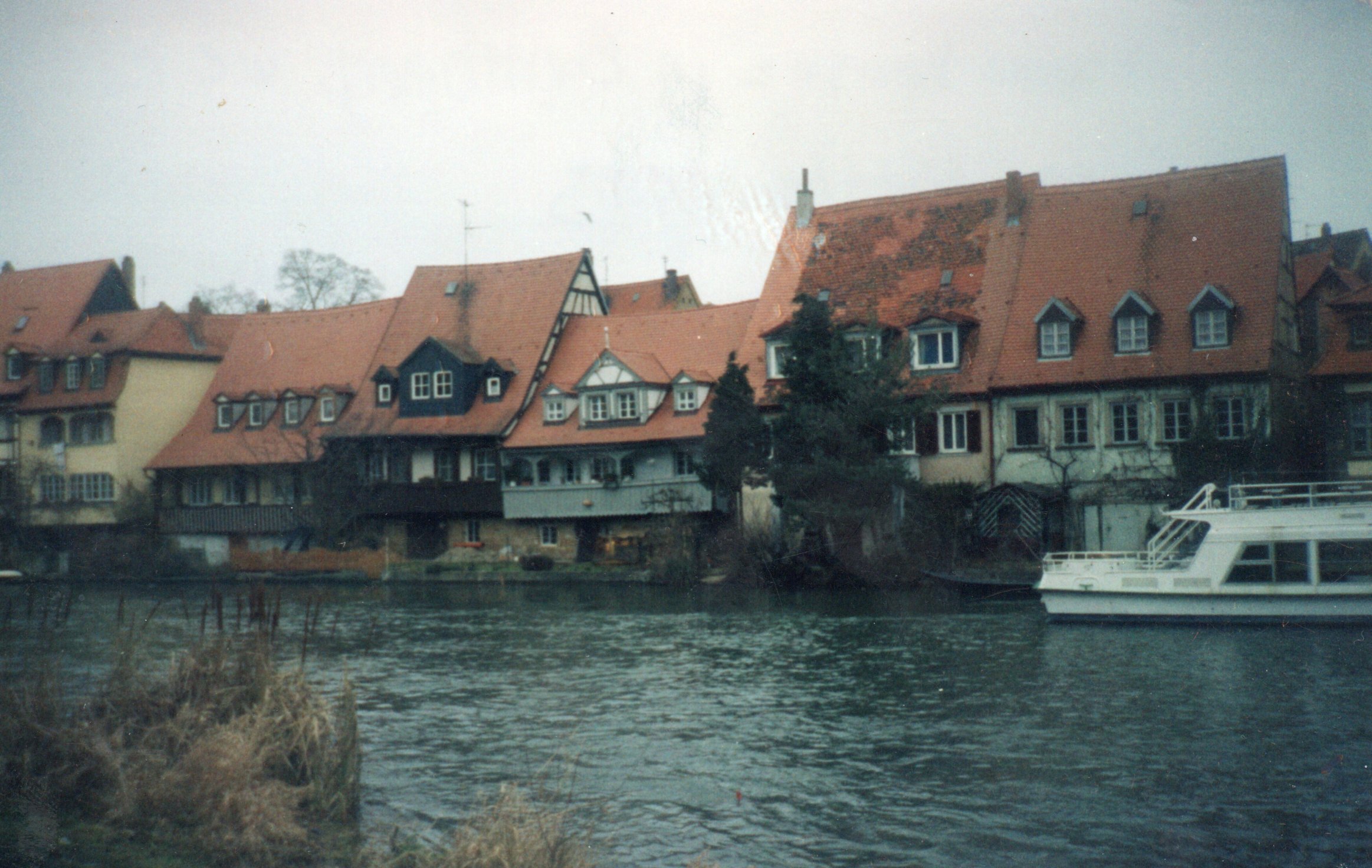
This is a closer shot of Little Venice
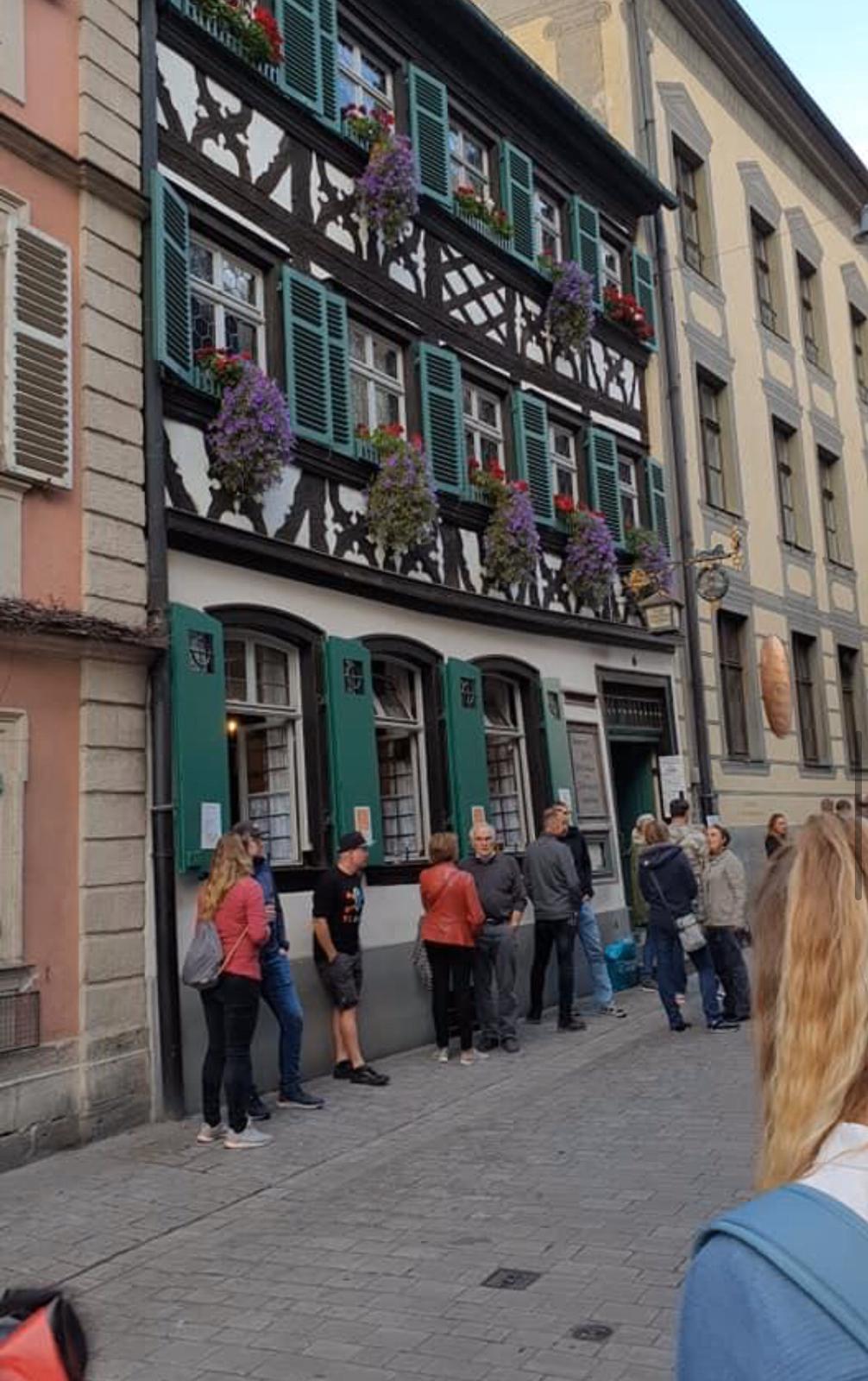
This is down town Bamberg where shops, stores such as music, books, nick nacks and in this case a resturant.
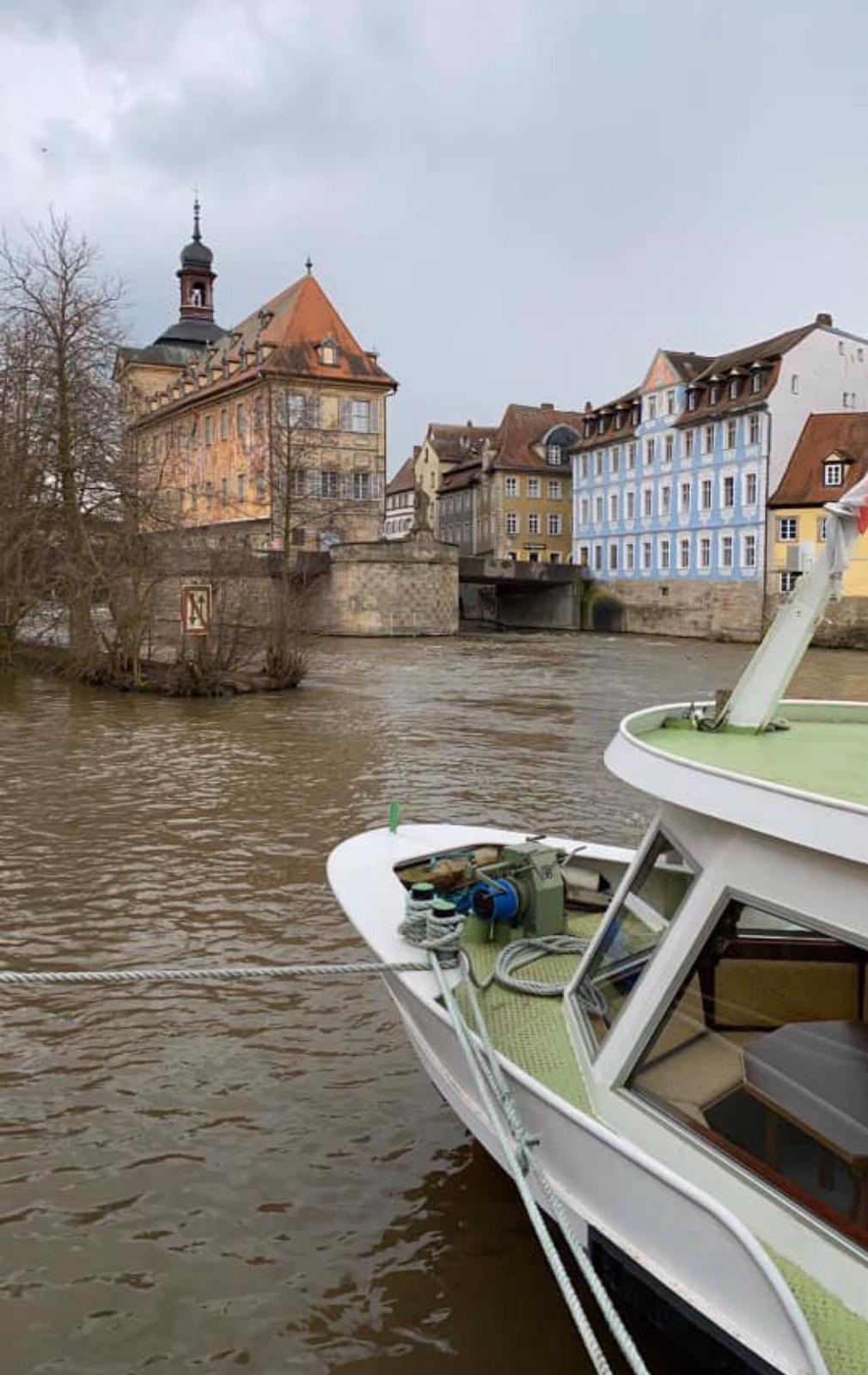
This is a picture of the Old Town Hall. In the 12th Century, Bamberg was ruled by 2 bishops and this river was the dividing line between their territories. Both Bishops wanted the town hall to be on there side of the river. After many debates (and fights) they finely agreed to put the town hall in the middle of the river in neutral territory where it as remained ever since.
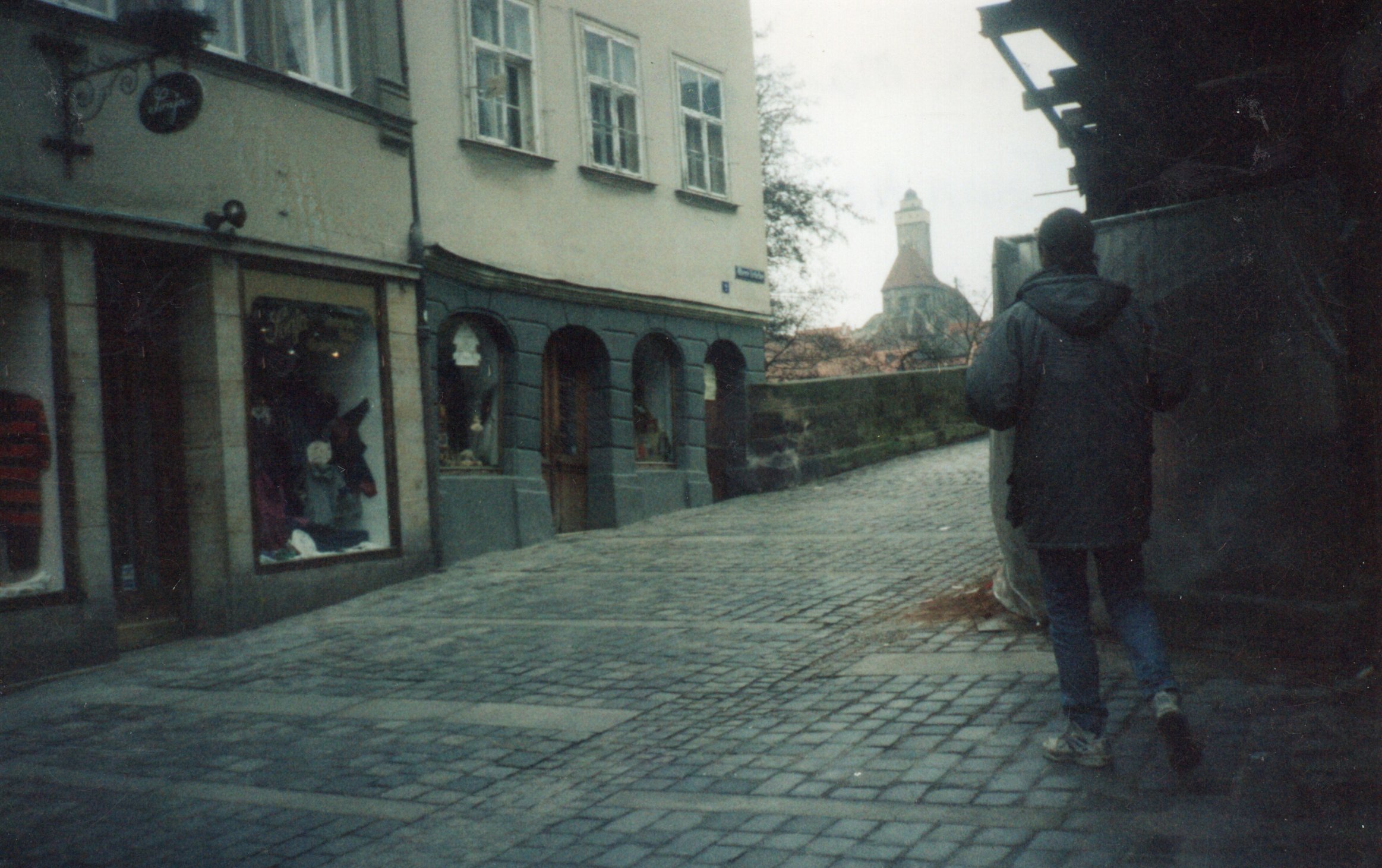
This is one of two roads that leads to the Old Town Hall which is in the middle of the river. You can see that the road slants up so much the store doors have to open in as they are below the street.